Quick Answer
Rowen is a 2,000-acre nonprofit-led “knowledge community” being built along Highway 316 in eastern Gwinnett County, between Dacula and the Barrow County line. Its first tenant, Belgian biopharmaceutical company UCB, is investing roughly $2 billion in a 460,000-square-foot biologics plant, the largest capital investment in Gwinnett County history. For homeowners in Dacula, Bethlehem, Winder, Statham, Loganville, Monroe and Jefferson, Rowen is the single biggest long-term demand driver in the Atlanta-to-Athens corridor. The catch is timing: the payoff is measured in decades, not quarters.
Rowen by the Numbers
Georgia’s answer to Research Triangle Park, 20 minutes from your front door
| 2,000 Acres in the master plan | $2B UCB capital investment | 330+ Permanent UCB jobs |
| $5B Projected economic impact | 22M Sq. ft. at full build-out | 1,900 Acres still available |
Sources: Gwinnett County, Office of the Governor, Rowen Foundation. Figures reflect announcements through mid-2026.
I have been selling homes along this corridor for more than 19 years, and I have watched a lot of “game changer” projects get announced with a press conference and then quietly die. Rowen is different, and the reason is simple. Dirt has moved, roads are in the ground, and a global pharmaceutical company just wrote a check for the land.
If you own a home anywhere between Lawrenceville and Athens, this is the development you should actually be paying attention to. Here is the honest picture: what is real, what is still a rendering, and what it means for your equity.
What exactly is Rowen, and where is it?
Rowen is a 2,000-acre master-planned community owned and stewarded by the nonprofit Rowen Foundation. It sits on wooded land straddling Highway 316 (University Parkway) in eastern Gwinnett County, roughly between Dacula and the Gwinnett-Barrow County line.
The concept borrows directly from North Carolina’s Research Triangle Park. In fact, Rowen Foundation President and CEO Mason Ailstock previously served as chief operating officer at Research Triangle Park. The idea is to put universities, government, and private industry on the same campus and let them collide. The focus areas are agriculture, medicine, and environmental science.
Geography is the whole argument. Rowen is almost exactly halfway between the University of Georgia in Athens and Georgia Tech and Emory in Atlanta. That is roughly 35 miles in either direction. No other site in Georgia can pull research talent from both ends of that corridor without asking anyone to relocate.
Rowen’s board includes leaders from UGA, Georgia Tech, Emory, and Georgia Gwinnett College. The foundation currently runs five “Living Lab” partnerships with Georgia higher education institutions.
What has actually been built so far?
This is the question that separates Rowen from vaporware, so let me be specific.
Infrastructure is done on phase one. The Development Authority of Gwinnett County put in roughly $70 million early on for land acquisition and initial buildout. Rowen then completed a $32 million “complete streets” project that delivered about two miles of new roadway, seven miles of multi-use pathways, greenspace, and full underground utilities including water, sewer, power, fiber, and natural gas. That work opened up roughly 800 acres of shovel-ready land. The street design earned Georgia’s first Greenroads pilot certification, with biofiltration swales and narrower lanes intended to cut heat island effect.
Ailstock summed up the before-and-after bluntly in an Atlanta Business Chronicle interview: until that project finished, there were no roads, no sewer, and no water on the site.
The first building is next. The Rowen Convergence Center, a 10,000-square-foot facility that will serve as the foundation’s home and the project’s public “front door,” was scheduled to break ground in mid-2026 with Atlanta-based Holder Construction as general contractor. Opening is targeted for 2027. It will sit inside Rowen Village, the roughly 150-acre mixed-use district planned at the center of the property.
Housing inside Rowen is still being negotiated. The foundation issued a request for proposals in late 2025 for a developer to build the first multifamily phase in Rowen Village. Ailstock has been consistent that housing is not the core mission, but that a working village needs somewhere for researchers and employees to live.
What is UCB building at Rowen, and why does it matter so much?
In March 2026, the State of Georgia, Gwinnett County, and the Rowen Foundation announced that UCB had selected Rowen for its first U.S. biologics manufacturing campus after a competitive multi-state search.
The details that matter to a homeowner:
- Roughly $2 billion in direct capital investment, the largest in Gwinnett County history
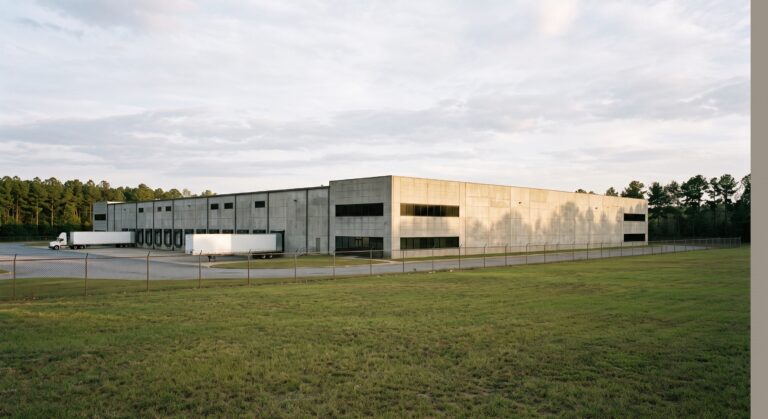
- A 460,000-square-foot facility on 79 acres at the end of Rowen Parkway, about the footprint of eight football fields
- More than 330 permanent jobs with an average annual salary reported above $72,000
- More than 1,000 construction jobs during a build expected to run at least six years
- An estimated $5 billion in total economic impact
- Gwinnett County committed roughly $174 million in incentives and infrastructure support, including tax abatements, fee waivers, and utility work
UCB did not lease. It bought, paying $14.3 million for the 79 acres according to the Gwinnett County deed. That distinction matters. Companies walk away from leases. They rarely walk away from land they own with a plant under construction on it.
Governor Kemp’s office called it one of the largest investments in state history. UCB’s U.S. headquarters has been in Georgia for more than three decades, which is part of why the site won.
How does the Highway 316 rebuild fit into this?
You cannot separate Rowen from what is happening to the road in front of it. Highway 316 is a 40-mile corridor running from I-85 in Gwinnett to the Athens Perimeter in Oconee County, and GDOT has been methodically converting it from a signalized surface highway into a true freeway.
The Transforming SR 316 program replaces at-grade signalized intersections with grade-separated interchanges and overpasses. Interchanges at Harbins Road in Gwinnett and at SR 81 and SR 53 in Barrow County are already complete, with additional bundles under construction near Bethlehem, Statham, Winder, and into Oconee County. Most of these carry substantial completion targets around 2028.
In January 2026, Governor Kemp announced an additional $200 million to accelerate the work, stacking on top of a reconstruction program already valued in the hundreds of millions. His framing was that it should not take an afternoon to drive from Athens to Atlanta.
For sellers, here is the practical translation. Every signal that becomes an interchange shortens a commute that buyers price into their offer. A house in Bethlehem or Statham that is a painful drive today becomes a very different house in 2029.
Where does your home stand?
Rowen is already showing up in corridor pricing. See what it means for your address.
Get a live, data-backed value range on your home plus equity and refinance insight, updated monthly. No pushy follow-up, just the numbers.
Which towns are closest to Rowen?
Rowen sits in a spot that touches several distinct housing markets at once. Here is roughly how the corridor lines up, west to east:
| Community | County | Relationship to Rowen |
|---|---|---|
| Dacula | Gwinnett | Closest established town. Rowen is frequently described as being “near Dacula.” |
| Lawrenceville | Gwinnett | County seat, straight shot down 316. Deepest inventory of the group. |
| Bethlehem | Barrow | Just over the line, directly on 316 with an interchange project underway. |
| Winder | Barrow | Barrow’s employment center, with its own industrial growth story. |
| Statham | Barrow | Small-town pricing on the Athens side of the corridor. |
| Loganville & Monroe | Walton | South of 316 but well inside commuting range, with lower Walton tax rates. |
| Jefferson | Jackson | North of the corridor, drawing buyers for its school system. |
If you are weighing which side of the line to buy on, the tax and lifestyle trade-offs are real. I broke those down in detail in Gwinnett vs. Walton County: Where to Move in 2026 and in the Gwinnett County cities guide.
What does Rowen actually mean for home values?
Let me separate what is already happening from what is projected.
Already happening: developers are pricing Rowen in. Indianapolis-based Thompson Thrift broke ground in early 2026 on Lineage, a 300-unit, nearly 15-acre mixed-use apartment community at the Harbins Road and Highway 316 interchange in Dacula, with first residents targeted for spring 2028. A second large residential project called University Parkway is also moving forward along the same stretch. Both developers explicitly cited proximity to Rowen in their announcements. A Publix-anchored retail center sits within a quarter mile of the Lineage site.
When national multifamily capital starts underwriting deals off a project’s job projections, that is a market signal, not a press release. I have seen the same pattern play out with Stanton Springs in Social Circle and with Northside Medical’s Loganville campus. Big employers pull rooftops toward them, and the rooftops arrive before the jobs do.
Still projected: the big job numbers. You will see figures like 18,500 jobs by 2035 and up to 100,000 jobs at full build-out quoted constantly. Those are Rowen’s own long-range projections across a multi-decade horizon, not commitments. Treat them the way you would treat any 30-year forecast. The number that is actually contractual right now is UCB’s 330-plus permanent positions.
What are the honest risks and unknowns?
I am not going to sell you a fairy tale. Here is what could go sideways.
Timelines are long. Rowen was announced in 2020. The first building had not gone vertical as of mid-2026. UCB’s plant is expected to take at least six years to construct. If you are buying a house today expecting a Rowen bump next spring, you are going to be disappointed.
Tenant number two is not signed. More than 1,900 acres remain available. UCB validated the site, but a research park needs a cluster, not an anchor. Watch for the next announcement.
Construction traffic is a real near-term cost. A thousand-plus construction workers plus simultaneous GDOT interchange work means detours, delays, and noise for the next several years. That is a genuine negative for anyone selling a home in the immediate impact zone right now, and buyers will ask about it.
Density is coming, and not everyone wants it. Rowen Village calls for four- to seven-story buildings and apartments. Growth pressure in this part of the corridor has already produced contested rezonings. I covered one of them in 28 homes were denied near Dacula. If large-lot rural living is why you moved out here, understand what is being planned around you.
Why Listen to Us
| 19+ Years in the corridor | 500+ Homes closed | 100.7% List-to-sale ratio | 21 Avg. days on market |
Davis Team average DOM of 21 days compares to a 69-day market average. See why sellers list with us.
What should buyers and sellers do right now?
If you are buying: the corridor towns closest to Rowen still price like bedroom communities, because that is what they have been. Bethlehem, Statham, and the Barrow side of the corridor are where the gap between today’s price and tomorrow’s commute is widest. Pull the GDOT interchange map before you write an offer and know whether the road in front of your prospective house is about to be rebuilt.
If you are selling in the next 12 months: Rowen is a story you can tell, but do not let a listing agent talk you into pricing off a 2035 job projection. Buyers pay for today’s comps and today’s commute. Price to the market, market the future as upside.
If you are staying put: do nothing except pay attention. Watch for the second corporate tenant announcement and for the Rowen Village multifamily developer selection. Those two events will tell you more about your equity trajectory than any headline about acreage.
Want to talk through how this affects your specific street? Call or text me at 770-833-5965, or start with a free home value report.
Rowen FAQs

|
About the Author Chris Davis, REALTOR®Chris leads the Davis Team at Keller Williams Atlanta Partners and has spent more than 19 years selling homes across the Atlanta-to-Athens corridor, including Gwinnett, Walton, Barrow, Newton, Oconee, Jackson, and DeKalb counties. He has closed 500-plus homes and more than $150 million in career volume. Georgia License #327023. Reach him at 770-833-5965. |
Sources: Gwinnett County, Office of the Governor of Georgia, Georgia Department of Transportation, the Rowen Foundation, Atlanta Journal-Constitution, Atlanta Business Chronicle, Gwinnett Daily Post, Urbanize Atlanta, and Thompson Thrift. Figures reflect public announcements available as of August 2026.
Disclaimer: This article is provided for general informational purposes only and does not constitute financial, legal, tax, or investment advice. Development timelines, job projections, and infrastructure schedules are subject to change and are not guaranteed. Real estate market conditions vary by neighborhood and by property. Consult qualified professionals regarding your specific situation. Chris Davis is a licensed Georgia real estate agent with the Davis Team at Keller Williams Atlanta Partners. Each Keller Williams office is independently owned and operated. Equal Housing Opportunity.