Quick Answer
What is it actually like to live in Monroe, Georgia?
Monroe, Georgia offers a rare small-town lifestyle where registered golf carts can legally cruise downtown Broad Street to local restaurants and boutiques. The market features a split between renovated historic homes near downtown and new construction communities pushing outward — each with distinct trade-offs on price, character, and maintenance. Weekdays run quiet and local. Weekends flip the script when visitors pour in for events, antique shopping, and dining, turning Broad Street into a different world for anyone who actually lives here.
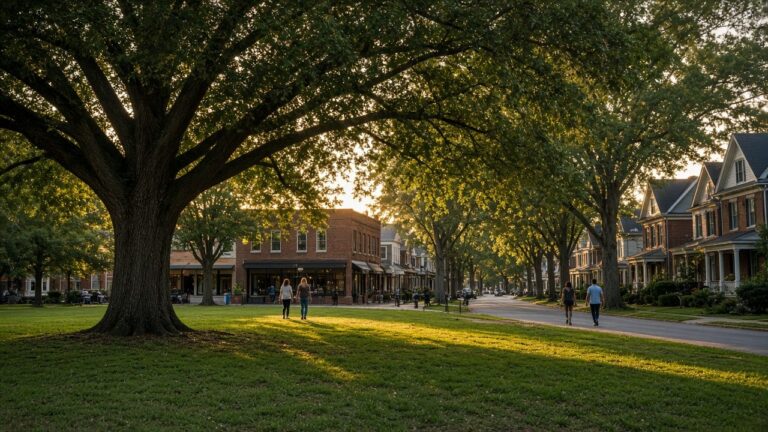
There’s a version of Monroe, Georgia that visitors see — tree-lined sidewalks, a buzzing downtown, antique stores stacked three deep, and a restaurant on every corner. Then there’s the version that people who live here know — the unhurried Tuesday morning coffee run, the neighbor who waves from their golf cart, the contractor next door quietly gutting a 1940s craftsman into something spectacular. Both versions are real. If you’re thinking about buying a home in Monroe, you need to understand both.
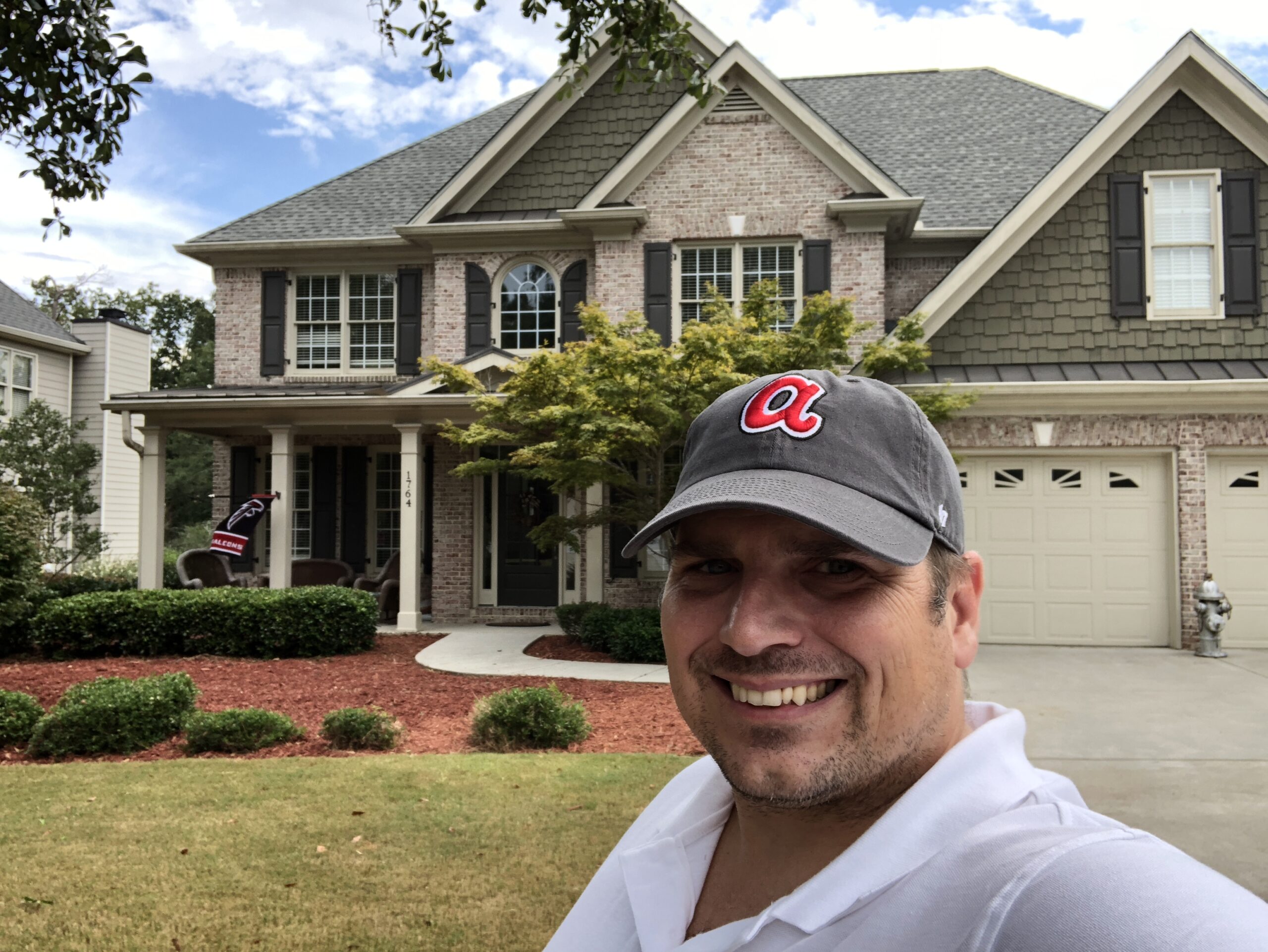
I’m Chris Davis with the Davis Team at Keller Williams Atlanta Partners. I’ve closed hundreds of transactions across Walton County, and Monroe has become one of the most interesting markets I watch. The housing inventory here tells a story — renovated bungalows competing with brand-new construction, landlords quietly aging out of properties they’ve held for decades, and a lifestyle question every buyer eventually has to answer: do you want the character of the old town, or the clean slate of the new?
Can You Really Ride a Golf Cart to Dinner in Monroe?
Yes — and it’s not a novelty. It’s part of daily life for residents who live within a mile or two of downtown. Monroe passed its golf cart ordinance allowing registered motorized carts on city streets with speed limits of 35 mph or less. That means Broad Street, the heart of downtown Monroe, is fair game. Register your cart with the city for $15, carry proof of insurance, and you’re cleared to roll.
What does that look like in practice? On a Friday evening you might load up the cart, take the side streets down toward downtown, and park in front of Moringa Thai & Sushi on South Broad — a local gem known for its creative rolls and authentic Thai dishes. Or head over to Catch 22 Gastropub, one of Monroe’s newer spots drawing a crowd with craft beer and elevated pub food. Coffee Camper at 101 S Broad is a Saturday morning ritual for locals — grab coffee and an empanada, loop the square, and head home before the out-of-towners even know where to park.
The boutique scene makes the golf cart even more practical. Downtown Monroe has built a genuine shopping corridor — the Rustic Rack Boutique, Southern Roots Outfitter, Well Mannered, and several antique stores including Vintage Revival Antiques and the Cotton Depot. The Walton County antique district — with over 1,200 booths and 300,000 square feet — is reputedly the largest concentration of antiques stores of any county in Georgia. You don’t need a truck. You need a cart with a cargo rack.
The Monroe-Walton Center for the Arts rounds out the walkable/cart-accessible amenities downtown — art shows, local artisan gifts, rotating exhibitions. For residents in the historic neighborhoods flanking downtown, this is all genuinely cart-accessible on a Sunday afternoon. That’s not something you can say about most communities in the Atlanta-to-Athens corridor.
“In Monroe, the golf cart isn’t the weekend toy — it’s a Tuesday morning decision. That changes how you think about where you buy.”
— Chris Davis, Davis Team at Keller Williams Atlanta Partners
Renovated Historic Homes vs. New Construction — Which Side of Monroe Are You On?
This is the defining question for buyers coming into Monroe right now, and it’s not just about aesthetics. It’s about what you value in a home, a neighborhood, and a daily routine. Monroe currently has these two distinct housing worlds operating side by side — and they attract very different buyers.
The Renovated Downtown Home
The neighborhoods directly around downtown Monroe — particularly along and near South Broad, Church Street, and the historic district — are stacked with Neoclassical, Queen Anne bungalows, craftsman cottages, and farmhouse-style homes built between the 1890s and 1960s. The best of these have been transformed. Think original hardwood floors refinished to perfection, granite countertops in a kitchen that was clearly ripped down to the studs, updated plumbing and electrical wrapped in a shell that still has character — transom windows, deep front porches, mature oak canopies overhead.
What you’re buying in a well-renovated downtown Monroe home is proximity and personality. You’re a short cart ride from every restaurant and boutique. Your street has been a street for a hundred years — the sidewalks are established, the trees are grown, the neighbors know each other. You’re inside the Georgia Main Street community that earned its GEMS designation in 2021 for historic preservation and economic development.
The trade-off is real, though: lot sizes are smaller, parking can be tighter, and not every renovated home is done well. Some sellers have done cosmetic work over serious deferred maintenance. As a buyer, you need an agent with renovation experience who can tell the difference between a flipped floor and a fixed foundation. I’ve done enough inspections in these neighborhoods to know what to look for.
The New Construction Community
Push outward from downtown Monroe a mile or two and you hit a completely different housing landscape. There are currently over 222 active new construction communities in the Monroe area, with median new home prices around $341,000 and luxury builds on acreage pushing well past $500,000. Names like Highland Creek, Stone Creek, Preserve at Tribble Mill, and custom builds along Bold Springs Road represent this wave.
New construction gives you what renovated homes can’t: builder warranties, open-concept floor plans designed for modern living, energy-efficient systems, and the ability to choose finishes before you move in. Custom builds in Monroe right now are offering wooden beams, shiplap, quartz countertops, covered back patios — the design language that buyers are requesting. One acre lots outside the city limits give you space to breathe that a downtown bungalow simply can’t provide.
The honest trade-off: you’re farther from everything. The golf cart stays in the garage. Your evenings involve a car. The neighborhood is five years old with no tree canopy and neighbors you haven’t met yet. The amenities are on their way, not already there. That’s not a dealbreaker for many buyers — but it’s a real distinction, and it drives two completely different living experiences inside the same zip code.
| Factor | Renovated Historic Home | New Construction Home |
|---|---|---|
| Golf Cart Access to Downtown | ✅ Often yes — walking/cart distance | ❌ Typically too far from downtown |
| Character & Uniqueness | ✅ High — original architectural details | ⚠️ Varies by builder and lot |
| Maintenance Risk | ⚠️ Higher — depends on renovation quality | ✅ Lower — builder warranty protection |
| Lot Size | ⚠️ Smaller urban lots typical | ✅ Larger lots, acreage options available |
| Mature Landscaping | ✅ Established trees and canopy | ⚠️ Young plantings — years from full canopy |
| Price Entry Point | ⚠️ Variable — condition-dependent | 📍 Median ~$341K–$372K for new |
| Community Feel | ✅ Established neighbors, block history | ⚠️ Community still forming |
The Hidden Inventory: Older Rentals That Are Coming to Market
Here’s what most buyers don’t know about Monroe — and what I see playing out across Walton County right now. There’s a quiet wave of older rental properties that are either already coming to market or will be soon. These are homes that have been held by individual landlords for 20, 30, sometimes 40 years. The landlords are aging. The properties haven’t been substantially updated. And the economics of holding a single-family rental in a rising-value market are shifting.
What does this mean for buyers? It means opportunity — with eyes open. These homes often hit the market in one of two conditions: tenant-occupied with a lease that needs to run out, or vacant and showing the deferred maintenance of a decade of landlord-minimum upkeep. You’ll see original fixtures, older HVAC systems, roofs that are functional but aging, and sometimes landscaping that tells the full story of neglect. They’re priced accordingly — or they should be.
For the right buyer — someone who can see past cosmetics and has a contractor relationship — these are the properties that become the best renovated homes in Monroe five years from now. The bones of a 1950s craftsman bungalow three blocks from downtown don’t change. The wiring and the kitchen will. What you’re buying is the location and the structure. Everything else is a to-do list.
If you’re an investor, these also represent a window. Rental demand near downtown Monroe is genuine — senior residents at MainStreet Walton Mill on South Broad, young professionals, and service workers all need housing close to the downtown core. A well-maintained rental within cart-distance of Broad Street commands a premium that a subdivision property simply can’t match.
Thinking About Selling in Monroe?
Find Out What Your Home Is Worth Today
Whether you own a renovated historic home, a new construction build, or a rental property you’re ready to exit — get a real number from a Walton County specialist with 500+ closed transactions.
Get My Free Home Value →Weekday Monroe: Quiet Streets, Local Rhythms, and Room to Breathe
If you’ve only experienced Monroe on a Saturday, you have an incomplete picture. Weekdays in Monroe run at an entirely different pace — and for residents, that’s a feature, not a bug.
Tuesday through Thursday, Broad Street is unhurried. Parking is easy. The restaurant you want actually has a table. Coffee Camper isn’t backed up to the door. The boutiques have staff with time to talk. Local business owners know your face. This is the everyday Monroe that doesn’t show up on Instagram — the one where you push your cart to the farmers market when it’s set up, pick up a few things from Southern Roots, and have a real conversation with your neighbor on the way home.
Monroe is located roughly 26 miles southwest of Athens and 46 miles east of Atlanta on Highway 78. That corridor matters. Many Monroe residents commute — some to Athens, some to the Gwinnett County employment centers near Lawrenceville and Suwanee, some to Atlanta. On weekday mornings, Highway 78 heading west toward Atlanta moves predictably, and traffic in Monroe itself stays manageable. The town isn’t a through-traffic bottleneck. It’s a destination — and on a weekday, it’s almost entirely your own.
For remote workers and self-employed residents, Monroe weekdays have become increasingly attractive. Several of the renovated downtown storefronts have added workspace-friendly coffee setups, and the overall quality of life — walkability, low traffic, access to dining without driving — makes working from Monroe genuinely comfortable in a way that a subdivision 30 minutes out simply isn’t.
Weekend Monroe: What Happens When the Out-of-Towners Arrive
Friday afternoon changes things. And Saturday morning changes them completely.
Monroe has built genuine regional draw. The First Friday Summer Concert Series on the Town Green brings live music, street vendors, and crowds to downtown from May through October — street closures on Broad start at 5:30 PM for vendors, open to the public at 6:00, and the music follows. The Downtown Farmers Market is a Saturday morning anchor. The Classic Car Show, the antique district drawing visitors from across metro Atlanta, and a growing calendar of seasonal events mean Monroe has traffic from people who don’t live here — and a lot of it, on weekends.
For residents, this is the honest tension of living in a town that’s become a destination. The parking situation on Broad Street on a busy Saturday is genuinely different from Tuesday. Restaurants that have a 20-minute wait on a weekday may be running 45 minutes on Saturday night. The streets near downtown see out-of-town license plates, slow-moving traffic, and visitors who aren’t sure which direction is one-way.
The locals have adapted. Residents who live close to downtown tend to use the weekend energy — they’re already there, they don’t need to fight for parking, and the cart solves the problem entirely. But residents who commute into downtown from the outskirts on a Saturday afternoon will feel the difference. Highway 78 through Monroe’s commercial corridor — near the Target, TJ Maxx, and Belk anchors — runs noticeably heavier on weekends as both Monroe shoppers and pass-through traffic combine.
This isn’t a dealbreaker — not even close. But it’s information buyers need. If you want quiet weekends, you need to think about exactly where in Monroe you’re buying. If you’re within a mile of downtown and have a golf cart, you’re playing a different game entirely — the traffic is happening around you, but you’re not in it.
Weekday Life
Quiet, Local, Yours
- Easy parking anywhere downtown
- No-wait dining at local spots
- Familiar faces at every shop
- Predictable Hwy 78 commute patterns
- Perfect remote work environment
Weekend Life
Energetic, Full, Busy
- First Friday concerts May–October
- Downtown Farmers Market on Saturdays
- Antique district pulls regional visitors
- Dining wait times extend significantly
- Hwy 78 commercial corridor gets heavy
Golf Cart Advantage
The Local Cheat Code
- Register with the city for $15
- Legal on all streets 35 mph or under
- Broad Street is fair game
- Skip weekend parking entirely
- Access restaurants, shops, events
Who Should Actually Be Looking at Monroe Right Now?
Monroe is not for everyone — and that’s exactly what makes it work for the people it’s for. Here’s the honest breakdown of who thrives here and who might be looking in the wrong place.
You’re probably a great fit if: you want genuine small-town lifestyle with actual walkability; you value a home with character over a cookie-cutter floor plan; you can handle some weekend energy as the price of living somewhere people want to visit; you work remotely, work in Athens, or commute to eastern Gwinnett; or you’re an investor who understands that proximity to a vibrant downtown is a durable rental advantage.
You might want to reconsider if: you need absolute quiet every weekend without exception; you require a short Atlanta commute (Monroe to Midtown Atlanta is 50+ minutes on a typical morning); or you’re expecting new construction square footage at downtown-adjacent pricing — that combination doesn’t exist here, or anywhere in this market.
The buyers I see succeeding in Monroe right now are making an intentional trade — they’re choosing lifestyle, community, and character over commute convenience and suburban sameness. And based on what I’m watching in this market, they’re making that trade at a point in Monroe’s growth curve where the value proposition still makes sense. That window doesn’t stay open indefinitely.
Frequently Asked Questions About Living in Monroe, Georgia

Chris Davis | REALTOR® — Davis Team at Keller Williams Atlanta Partners
GA License #327023 | East Georgia Local Economist | 500+ Homes Closed
Chris Davis specializes in the Atlanta-to-Athens corridor — Walton, Gwinnett, Barrow, Newton, Oconee, DeKalb, and Jackson counties. With $150M+ in career volume and deep transactional knowledge of East Georgia’s evolving markets, Chris brings data and direct experience to every buyer and seller conversation.
770-833-5965 | chris@eastgahomes.com | Leave a Google Review ⭐
Ready to Make Monroe Home?
Know What Your Monroe Property Is Worth
Whether you’re buying, selling, or watching the market — get accurate, Walton County-specific home value analysis from a local expert with 20+ years and 500+ closed transactions in East Georgia.
Get My Free Home Value →Or search active Monroe listings at eastgahomes.com