Quick Answer
Standard neighborhood utility poles have no measurable impact on health or home value in Walton, Gwinnett, Barrow, or Newton County. Large steel transmission towers are a different conversation, one that affects your resale pool, potential appraised value, and in limited cases, health considerations for specific populations. Here is what the research actually says.
You are touring a home in Loganville, Monroe, Winder, or somewhere along the Covington corridor. It checks every box. Good bones, a neighborhood that feels right, and a price that works. Then you look out the back window and there is one of those tall steel lattice towers strung with thick cables cutting across the back of the lot.
Does that change things? Should it?
East Georgia has seen some of the fastest population growth in the state over the last decade, with development pushing outward along the US-78 and I-20 corridors in ways that often run directly into existing utility infrastructure. More buyers than ever are encountering this question in fast-growing pockets of Gwinnett County, across Walton County, and through the Newton and Barrow growth corridors. Here is an honest look at what the research says, what it does not say, and what matters most if you are buying or selling near transmission lines in this part of Georgia.
44.9%
Value discount for vacant lots directly adjacent to high-voltage lines (2018 Journal of Real Estate Research)
~200m
Distance at which EMF exposure typically drops to levels comparable to household appliances
40+ yrs
Of research without a confirmed causal link between power line EMF and cancer in adults
First, Know What You Are Looking At
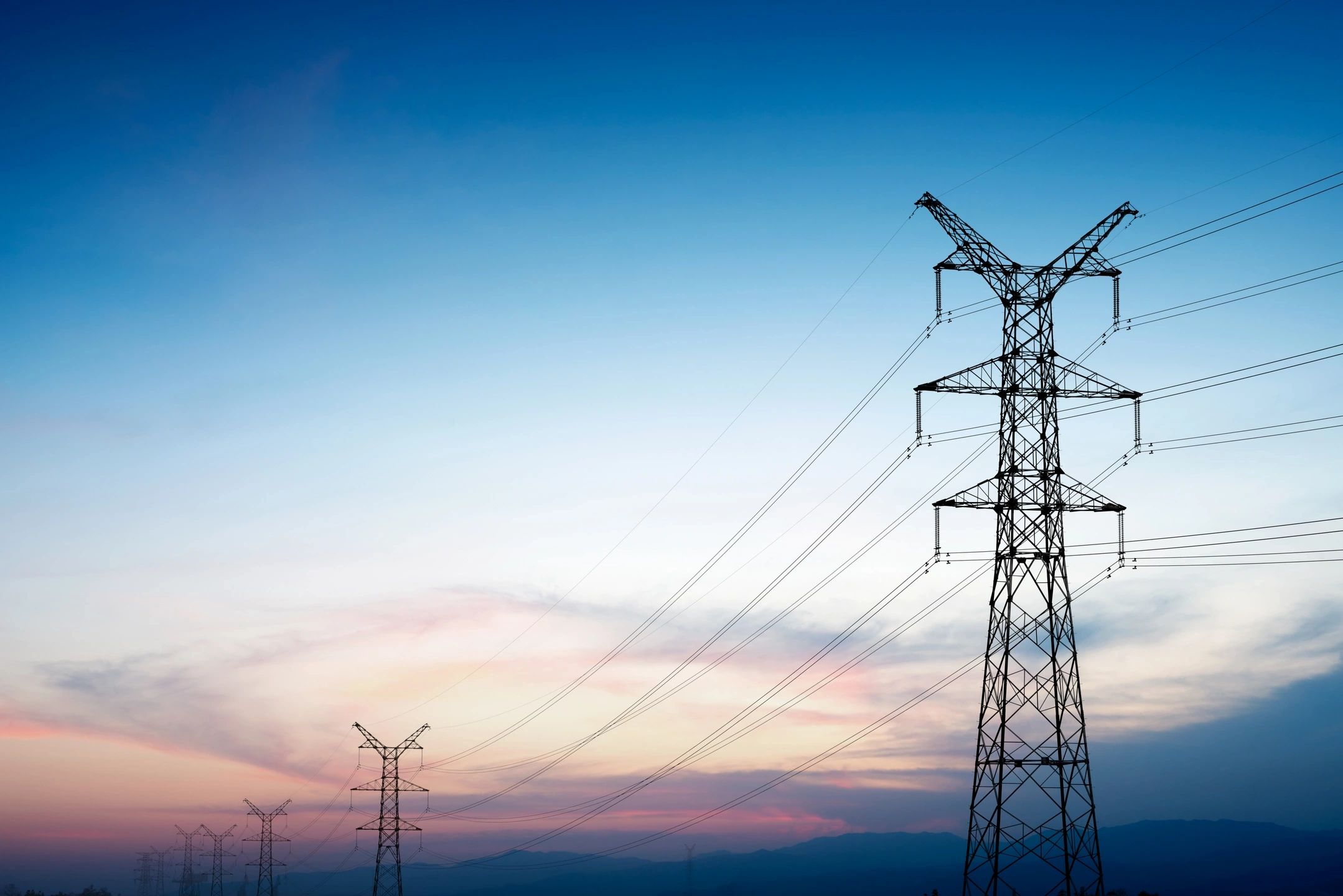
There is a significant difference between the wooden utility poles running down most residential streets and the large steel lattice towers that carry high-voltage lines long distances between substations. Both are power lines, but the towers are a different visual and an entirely different conversation.
Most of what you will see in established Gwinnett County neighborhoods, newer Walton County subdivisions near Social Circle and Good Hope, and along well-traveled roads through Barrow and Newton counties are standard distribution lines on wood poles. These are present on virtually every street in the region and rarely come up in buyer conversations. The steel lattice towers, the kind you will recognize from Georgia Power’s high-voltage transmission corridors, are what the research focuses on and what this post is about.
In fast-developing East Georgia markets, new subdivisions have been platted around or adjacent to established transmission corridors, particularly near growth nodes along US-78 in Walton County, along GA-20 through Barrow County, and along the I-20 corridor through Newton County. Understanding which type of line you are actually looking at is the starting point for any honest conversation about buying or selling.
The Health Question: What Science Actually Knows
This is where buyers most often have questions, and where the honest answer is: the science is genuinely unsettled, but mostly reassuring.
The Big Picture
No health risk from living near power lines has been conclusively proven. After more than 40 years of research, major health agencies including the National Cancer Institute, the National Institute of Environmental Health Sciences, and the World Health Organization have not established a definitive causal link between residential EMF exposure and cancer in adults. As the Electric Power Research Institute summarizes, expert panels collectively find no persuasive evidence of cancer risk for adults from residential EMF exposure.
The One Area of Genuine Uncertainty
Childhood leukemia is the exception that keeps researchers’ attention. International health agencies classify extremely low-frequency (ELF) magnetic fields as a “possible” carcinogen specifically in this context. Not probable. Not confirmed. But possible. Studies have found weak statistical associations between living close to high-voltage lines and a slightly elevated leukemia risk in children, particularly within about 200 meters of the lines. Results across studies are inconsistent and no clear biological mechanism has been established, but the signal is persistent enough that researchers have not dismissed it.
Context That Matters
EMFs are not unique to power lines. Your phone, microwave, Wi-Fi router, and electric blanket all emit electromagnetic fields. Research shows that moving just a few hundred feet from high-voltage transmission lines brings EMF exposure down to levels comparable to ordinary household appliances. Distance is the single most significant factor in any EMF exposure calculation.
One Specific Population to Flag
People with implanted cardiac devices like pacemakers or defibrillators should consult their cardiologist about proximity to high-voltage lines. Electromagnetic interference is a documented concern for those devices, and it is worth a direct conversation with your physician before moving forward.
Bottom Line on Health
If you have young children and you are evaluating a home directly adjacent to a high-voltage transmission tower, that is worth factoring into your decision. Not as a reason to panic, but as one consideration to think through with clear eyes. For most buyers without specific risk factors, the research does not support treating power line proximity as a serious health threat.
The Property Value Question: More Complicated Than a Single Number
Research on resale impact varies significantly depending on how close the home is, how visible the lines are, and what type of line we are talking about. A review published by the Counselors of Real Estate found that the research record is genuinely mixed, with some studies finding significant discounts and others finding no statistically measurable effect once other variables were controlled. Here is how the data breaks down across proximity scenarios:
| Proximity Scenario | Typical Value Impact | Market Time Effect |
|---|---|---|
| Directly adjacent to or under high-voltage tower | Up to 44.9% discount on vacant lots; 10% to 30%+ on homes within 150 ft | Significantly longer DOM; narrower buyer pool |
| Within 1,000 ft but not directly under | Studies suggest roughly 17.9% below comparable homes further away | Moderate increase in days on market |
| Lines screened by trees or structures | Reduced impact vs. fully visible lines; can approach normal range | Near-normal in many markets |
| Standard wood-pole distribution lines | No measurable effect in most studies | No meaningful impact |
Sources: Journal of Real Estate Research (2018); FastExpert real estate analysis; Counselors of Real Estate research review.
One consistent finding across studies: visibility often matters as much as distance. When lines are screened by trees or structures, buyer aversion drops considerably. This is relevant in East Georgia, where mature tree lines along older property boundaries, particularly on larger lots in Walton and Barrow counties, can meaningfully soften the visual impact during a showing.
What does not change regardless of study is the resale pool. Even if you decide the home is perfectly fine, you are betting that future buyers will feel the same. Homes near transmission towers across Walton, Gwinnett, Barrow, and Newton counties tend to sit on the market longer and draw from a narrower pool of buyers. That is a real market dynamic, and any honest analysis has to account for it when you are evaluating a purchase or planning a sale.
Easements, Noise, and Financing: The Details Nobody Talks About
Easements and Land Use
If a transmission line runs through or adjacent to your property, there is almost certainly a utility easement in place. Georgia Power holds easement rights that allow them to access the corridor for maintenance and vegetation management. Trees that grow into the easement can be trimmed or removed on their schedule, not yours. Review the easement language in your deed or title search before closing and understand exactly what it restricts.
Noise in Georgia’s Humidity
High-voltage lines can hum, and Georgia’s humid summers make that hum more pronounced than in drier climates. It is subtle for most people but worth standing outside during a showing and actually listening before you commit. Ask your agent to schedule a second visit on a humid afternoon if your first showing happened on a mild, dry day.
Insurance and Financing
Most conventional loans do not restrict financing based solely on power line proximity, but some lenders look more closely when a home sits directly adjacent to an easement. If the property you are considering backs up to or sits under a transmission corridor, have a brief conversation with your lender before going under contract to avoid surprises at the appraisal stage.
How We Think About It as East Georgia Agents
The Davis Team works across Walton, Gwinnett, Barrow, and Newton counties, and we see power line proximity come up regularly, particularly in growth corridors where development has pushed into land that was rural just 15 years ago. It is a natural byproduct of East Georgia’s growth pattern.
Our honest take: the wooden poles running down your street are a non-issue. The large steel transmission towers are worth a real conversation. Not because the science says to walk away, but because you deserve to understand exactly what you are buying, how it may affect your future resale pool, and whether it fits your specific situation and timeline.
A few scenarios worth thinking through specifically:
- If you have young children, a family health history worth considering, or you are purchasing primarily as an investment you will need to sell within five to seven years, those factors deserve more weight in this analysis.
- If you are buying for the long term, the price already reflects the discount, and you are genuinely unbothered by the view, that is a real trade-off that works for a lot of buyers in this market and at this price point.
- If you are a seller near transmission lines, pricing strategy and marketing to the right buyer pool matter more than almost anything else in how your listing performs. The buyers are out there; reaching them efficiently is the job.
The goal is never to steer you toward or away from any particular property. It is to make sure you are deciding with clear eyes and the full picture in front of you.
Ready to Search Active Listings?
Browse current MLS listings across Walton, Gwinnett, Barrow, and Newton counties, including off-the-beaten-path properties with room to negotiate.
Search East GA HomesFAQs: Power Lines and Home Buying in East Georgia

Chris Davis | REALTOR
Davis Team at Keller Williams Atlanta Partners | GA License #327023
19+ years, 500+ closings, and $150M+ in career volume across Walton, Gwinnett, Barrow, Newton, and surrounding East Georgia counties. Questions about a specific property? Call or text anytime.
Call 770-833-5965Searching for Homes?
Browse current listings across Walton, Gwinnett, Barrow, and Newton counties with real MLS data updated daily.
Search ListingsThinking About Selling?
Pricing strategy and reaching the right buyer pool are everything near transmission lines. Start with your home’s current market value.
Get Your Home Value